Overview & Outlook: AI and Data Science Degrees in 2026

Learn More
Thank you! Your submission has been received!
Oops! Something went wrong while submitting the form.
Thank you! Your submission has been received!
Oops! Something went wrong while submitting the form.

In 2026, Skills Are Outrunning Credentials in AI

The 2026 Burtch Works Compensation Report shows the academic credentials shaping the AI and Data Science talent market are diverging.

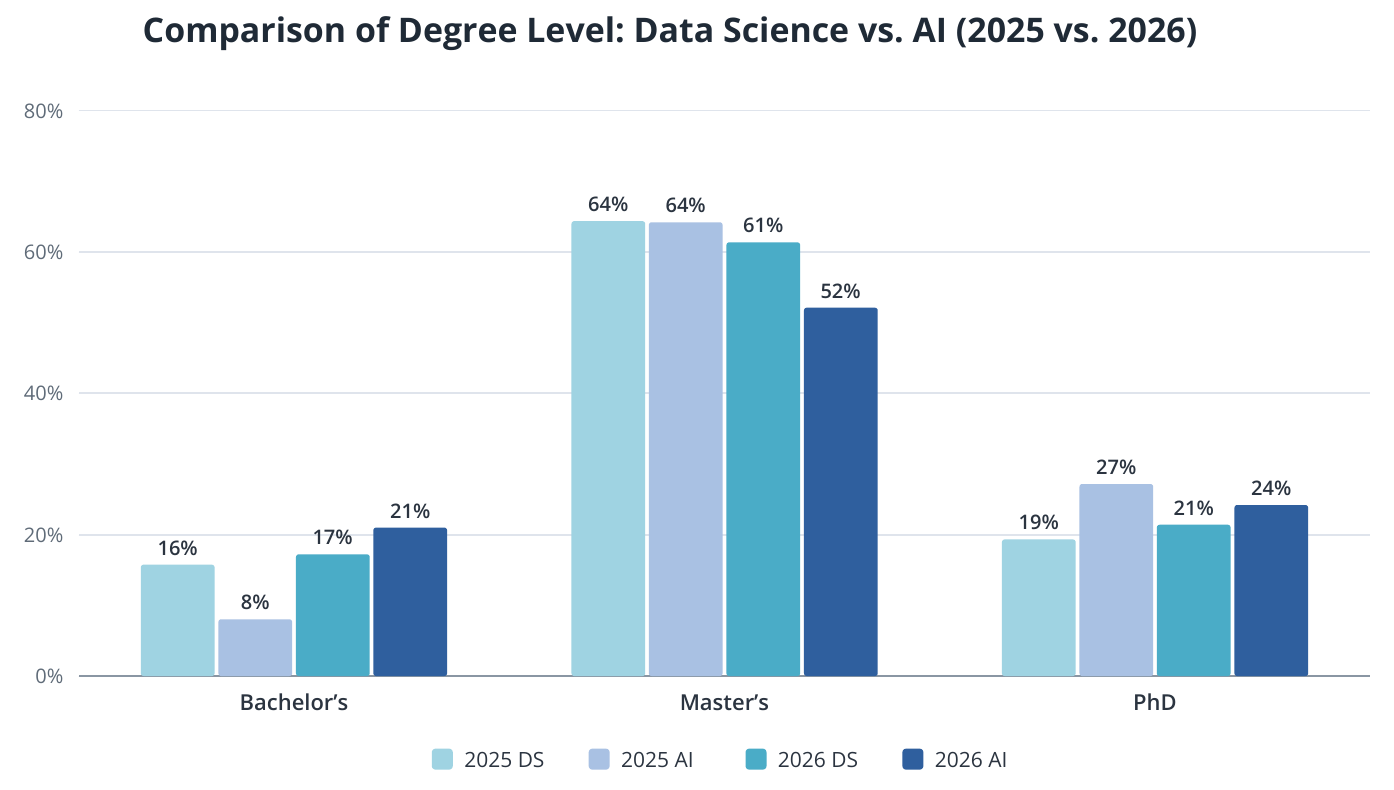
  • 76% of AI Professionals hold a graduate degree (Master’s or PhD) in 2026, down from 91% in 2025.
  • The Bachelor’s share of AI Professionals nearly tripled to 21% (8% in 2025), while Master’s fell to 52% (64%) and PhDs held near 24% (27%).
  • Data Science is stable: Master’s 61% (64% in 2025), PhD 21% (19%) and Bachelor’s 17% (16%).

‍

For hiring managers, the message is clear:

  • In AI, shipped systems and platform experience increasingly substitute for an advanced degree—Bachelor’s holders average $166,458 at IC-2 (Master’s $149,771) and $189,516 at IC-3 (Master’s $188,318).
  • In data science, the Master’s remains the default credential, and PhDs still earn the most at IC-2 ($154,452 mean) and IC-3 ($170,108).
  • Screening AI candidates on demonstrated work—production systems, evaluation harnesses, open-source contributions—rather than degree alone opens a broader pool of senior builders.

For graduates and job seekers alike, especially those considering career advancement in AI and Data Science:

  • In AI, skills are outrunning credentials: what you have shipped now carries as much weight as the degree you hold.
  • In data science, a Master’s is still the standard, and PhDs keep a pay edge at the senior IC levels where research depth matters.
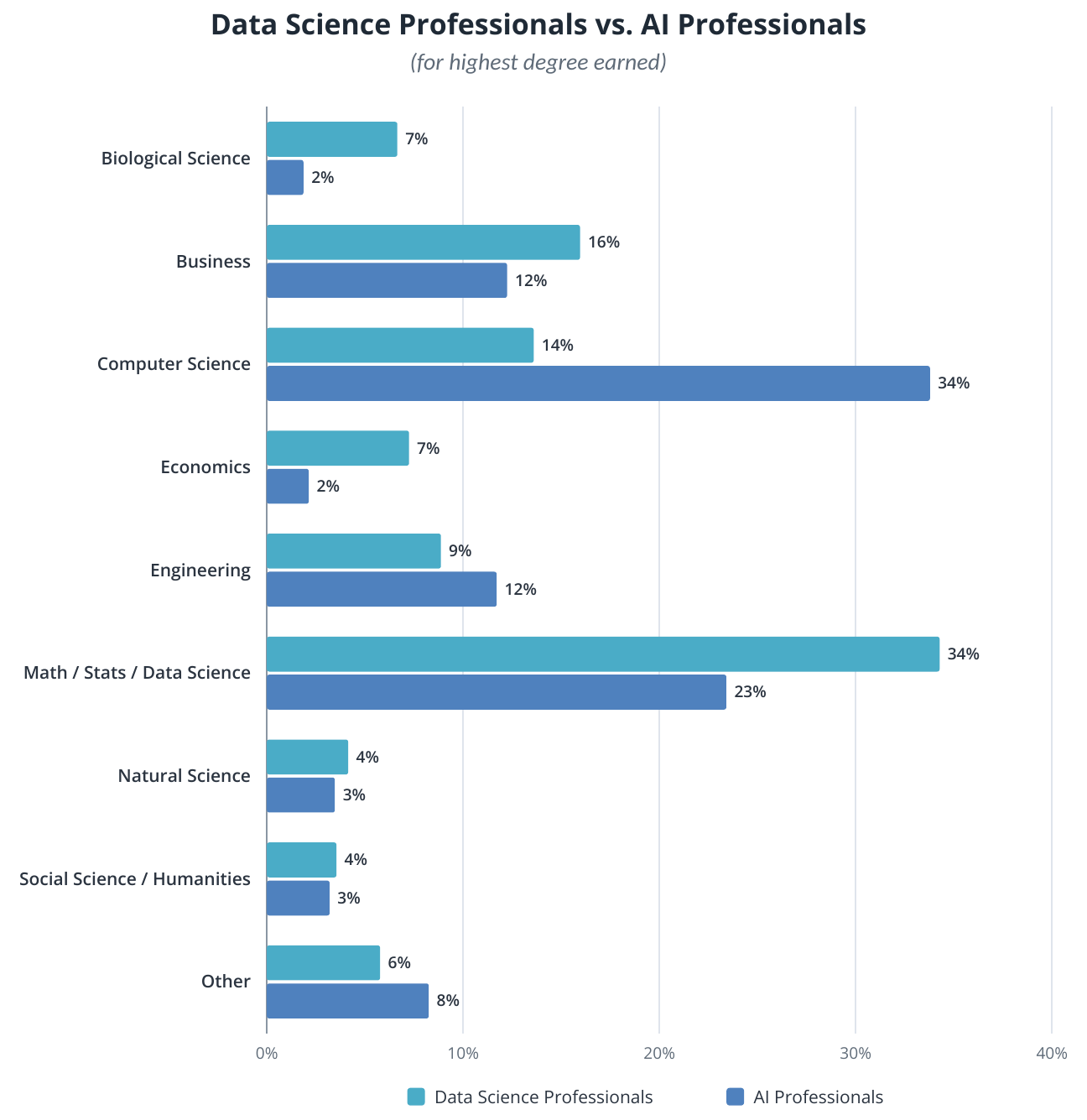
  • Computer Science is the most common field among AI Professionals (34%); Mathematics, Statistics and Data Science lead among Data Scientists (34%).
Diverse group of graduates in caps and gowns with digital AI and technology graphics overlay.

Comparison of Degree Level: Data Science vs AI (2025 vs 2026)

Bar chart comparing degree level for Data Science and AI in 2025 and 2026: AI Bachelor's share rose from 8% to 21% while Master's fell from 64% to 52%.

Data Science Professionals vs. AI Professionals Area of Study

Horizontal bar chart of highest-degree area of study in 2026: Computer Science leads AI Professionals at 34%; Math/Stats/Data Science leads Data Scientists at 34%.

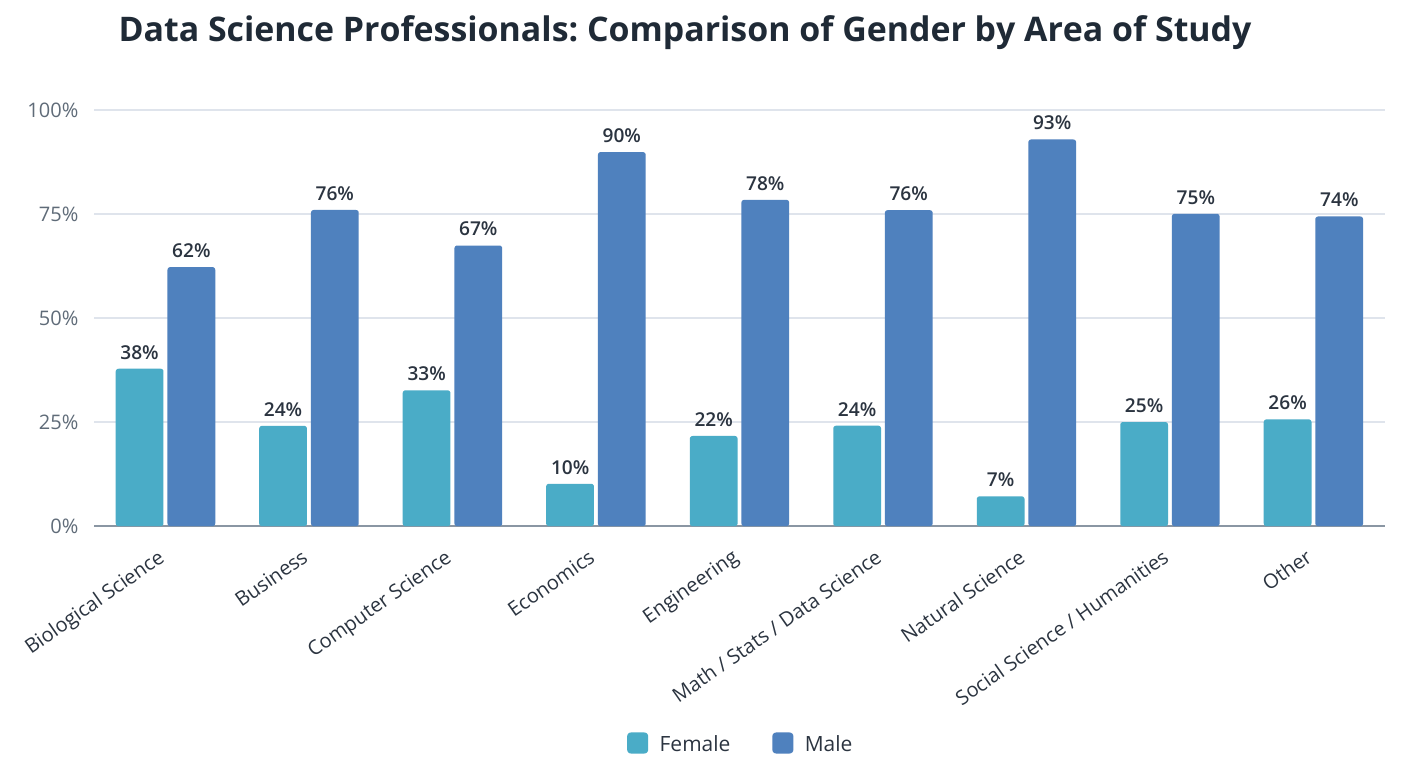
Data Science Professionals: Comparison of Gender by Major

Bar chart of Data Science Professionals by gender and area of study in 2026.

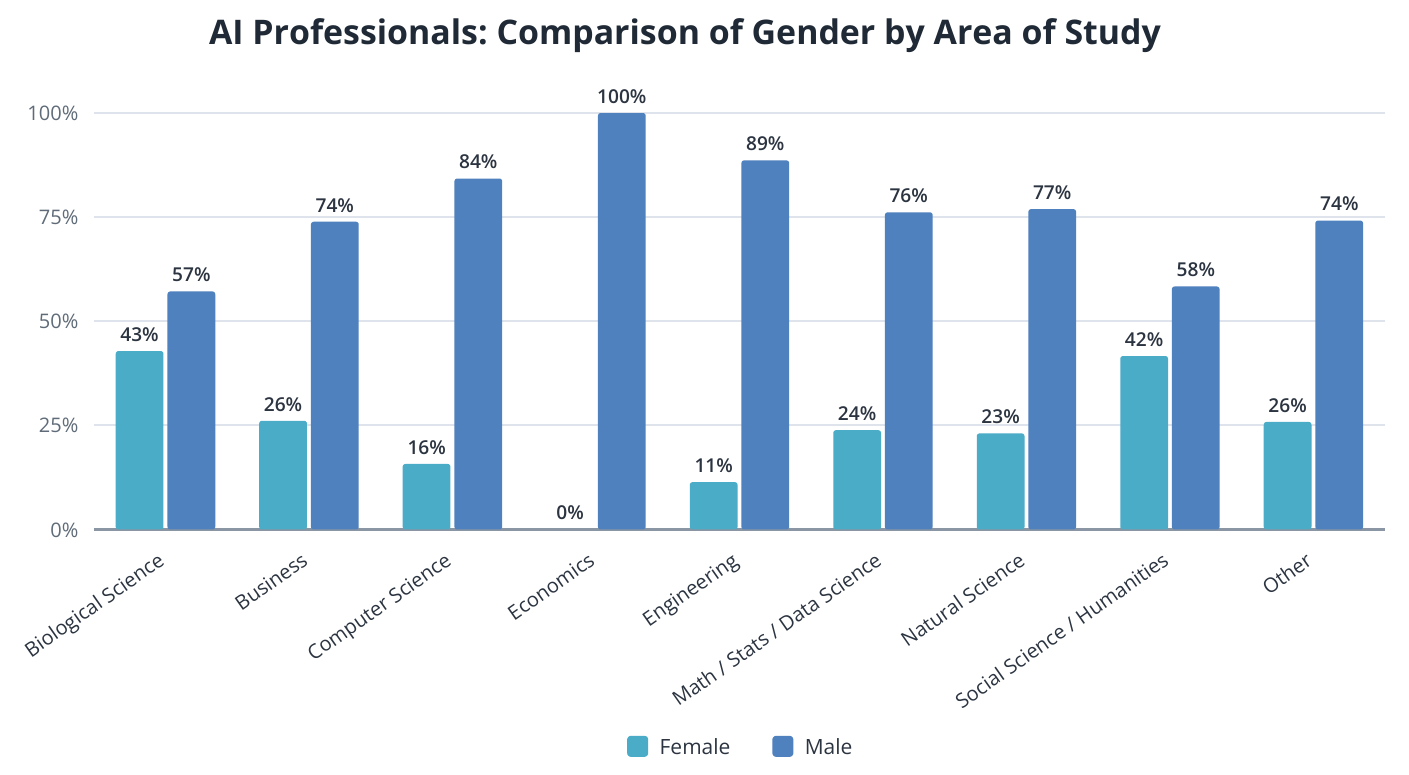
AI Professionals: Comparison of Gender by Area of Study

Bar chart of AI Professionals by gender and area of study in 2026.

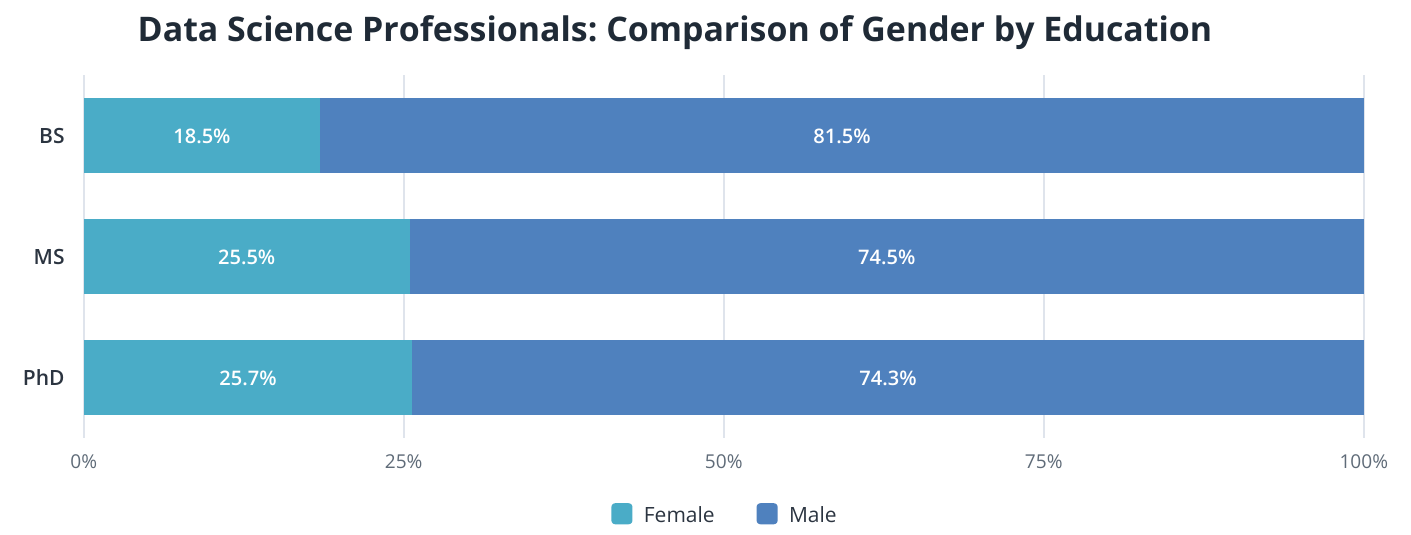
Data Science Professionals: Comparison of Gender by Education

Stacked bar chart of Data Science gender by education in 2026: women are 18.5% of BS, 25.5% of MS and 25.7% of PhD holders.

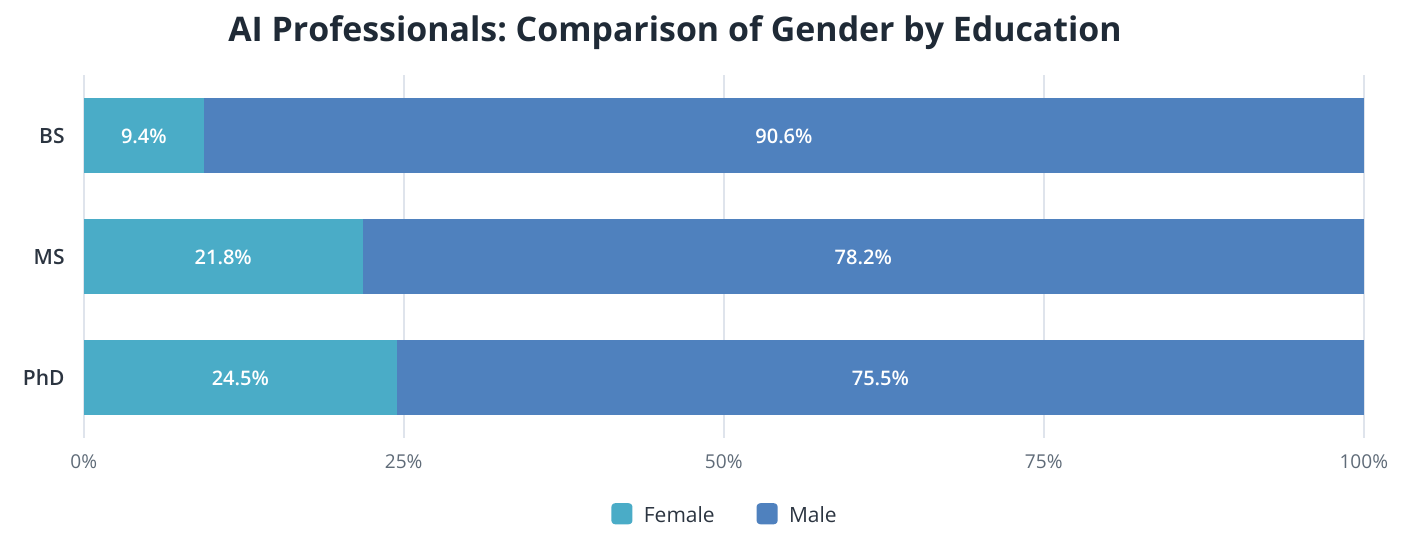
AI Professionals: Comparison of Gender by Education

Stacked bar chart of AI Professionals gender by education in 2026: women are 9.4% of BS, 21.8% of MS and 24.5% of PhD holders.

Mastering AI and Data Science

Group of diverse smiling graduates wearing caps and gowns standing together with digital futuristic graphics overlay.

Degrees of Separation

The credential picture is splitting. In a talent market driven by AI at scale, employers and professionals must evolve.

For companies, understanding the changing credential landscape helps refine hiring strategies and salary benchmarks.

For talent, aligning education and experience with new skill demands ensures ongoing relevance and opportunities.

So, do you need a master’s degree for AI and Data Science roles? In data science, a Master’s is still the standard. In AI, what you have built increasingly matters as much as the degree.


‍

Download The Full Report

Thank you! Your submission has been received!
Oops! Something went wrong while submitting the form.
Thank you! Your submission has been received!
Oops! Something went wrong while submitting the form.